
Investigating the Mechanism of Temporomandibular Arthritis Using Tissue Engineering and Molecular Analysis
Why the Lübeck-Sharjah Dual Degree Program?
I joined this program to enhance my laboratory skills and deepen my knowledge in the field. I'm working on creating 3D-printed models of jaw joint cartilage to help better understand and treat joint damage. This research could one day benefit people with temporomandibular joint (TMJ) disorders, such as arthritis in the jaw. I gained exposure to 3D printing technology, which can contribute to advancing the available treatment options.
The Project:
Tissue regeneration of the temporomandibular joint has been a highly active area of research over the past decade. Several types of scaffolds and cell sources have been explored. Among these, autologous cells are considered the ideal choice for tissue regeneration. Chondrocytes are the most suitable cell source for cartilage repair; however, they present significant limitations, including brittleness in monolayer culture, donor site morbidity, insufficient cell yield, and limited intrinsic healing capacity. The aim of this research is to engineer a temporomandibular joint disc from a cell lines ( chondrocytes or Fibroblast) that closely resembles the native disc in shape, geometry, and function. The engineered construct will be characterized using a range of molecular and biomechanical techniques, including immunohistochemistry, stability testing, mass swelling ratio analysis, rheological measurements, quantitative PCR, and bio-stimulation assays to evaluate the response of the cellularized disc to moderate forms of immunotherapy.
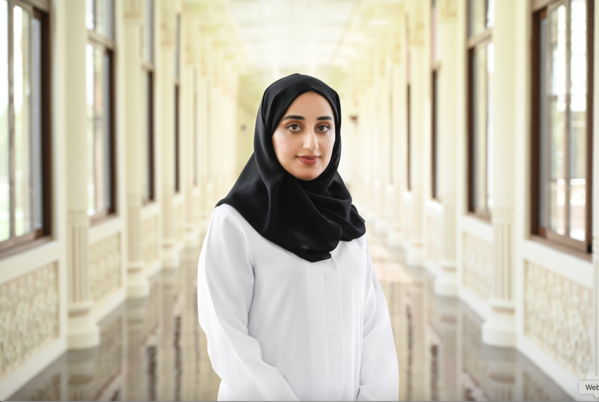
Nawal Saeed Ali Alhafri Alketbi
Second Year Phd Student
PIs Lübeck:
Prof. Kathrin Kalies
Prof. Hauke Busch
PIs Sharjah:
Prof. Rifat Hamoudi
- Projects
- Lina Walid Moh'd Sahnoon
- Nawal Saeed Ali Alhafri Alketbi
- Ranyah Mohammed Saleh Al-hakm
- Salam Mohamad Dak Al Bab